Investor profiles · CUPEC Media
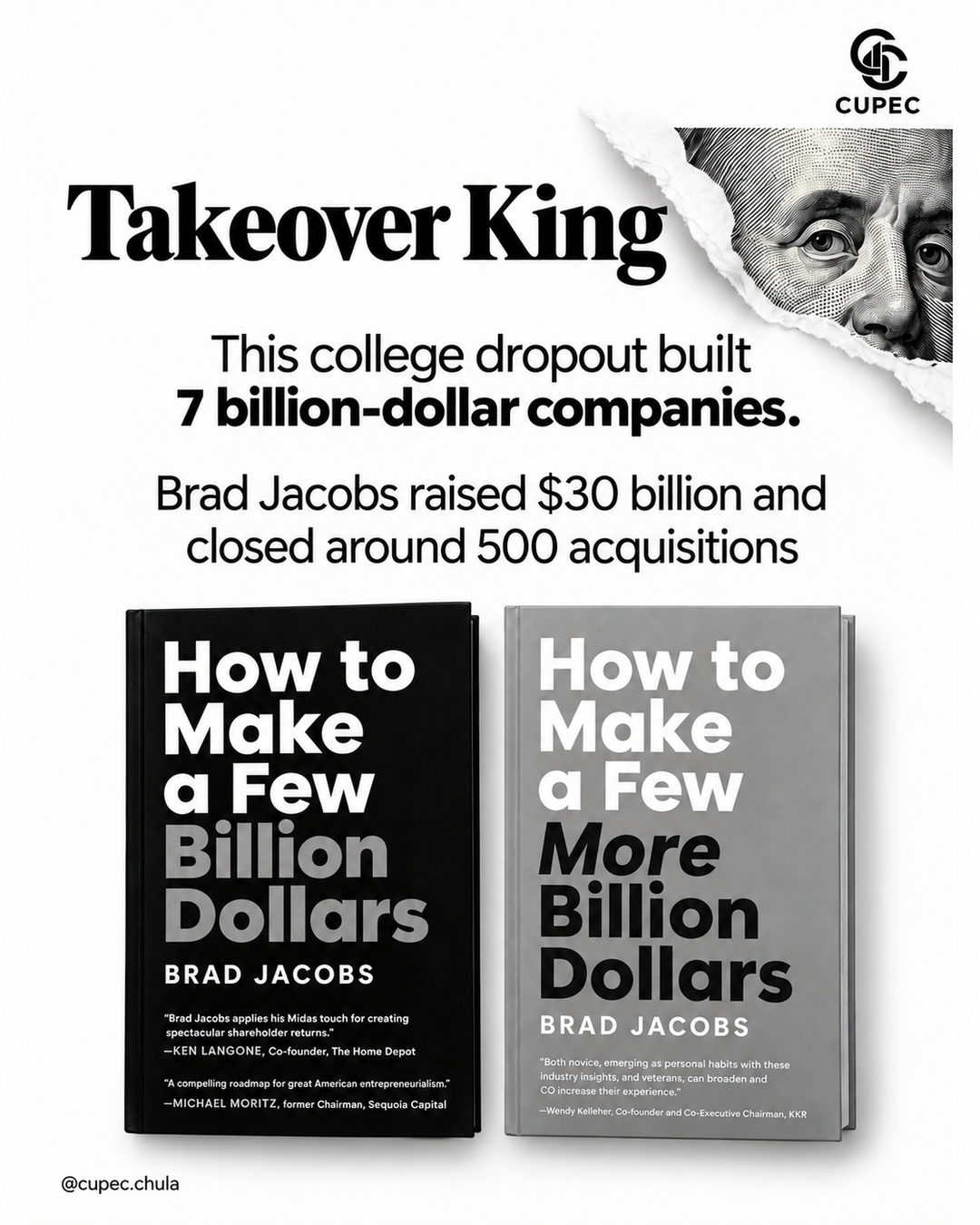
How to Make a Few Billion Dollars
Brad Jacobs's acquisition playbook through a student lens: combining businesses only creates value when the combined operation works better.
Read the story ↓
Buying businesses is the beginning
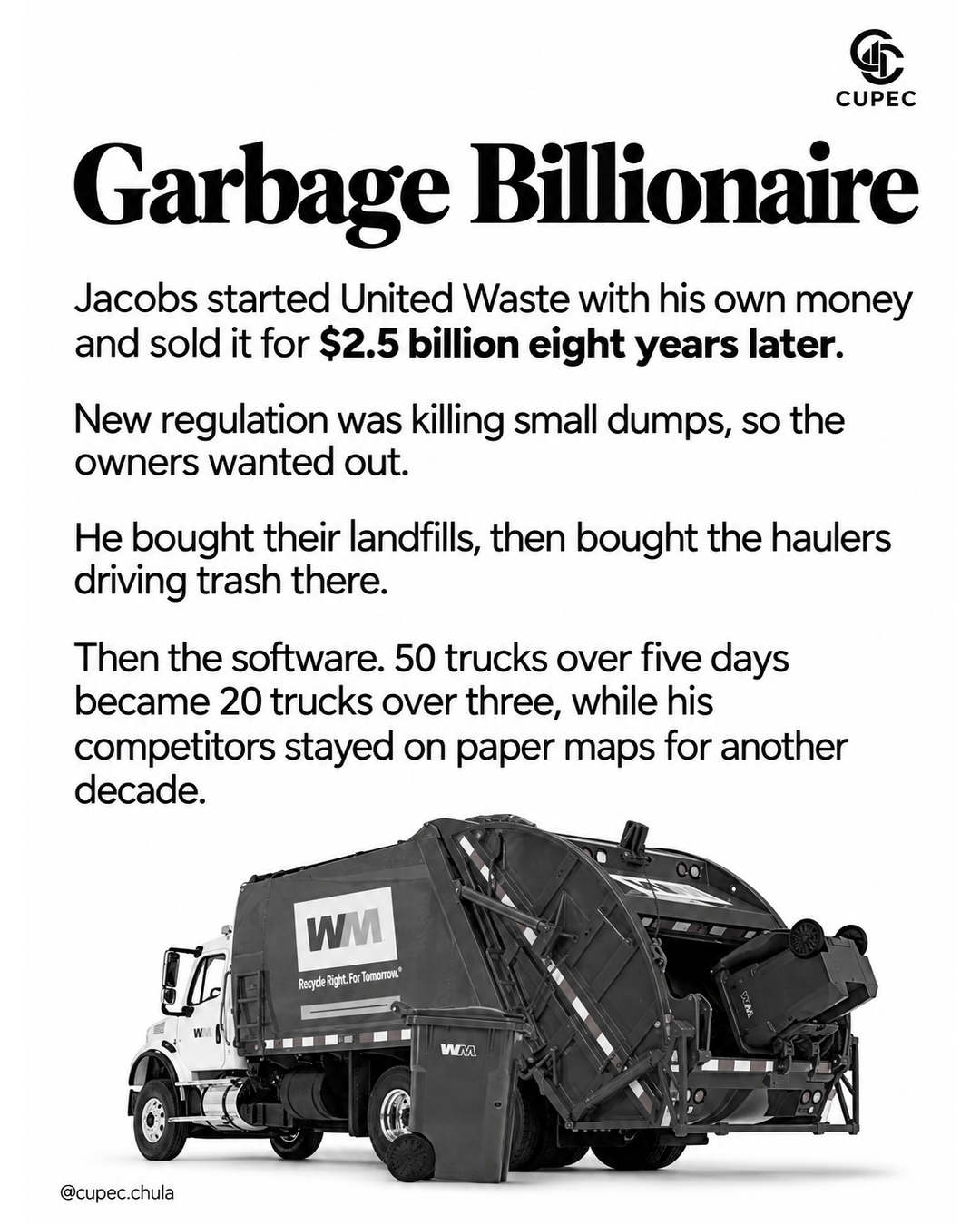
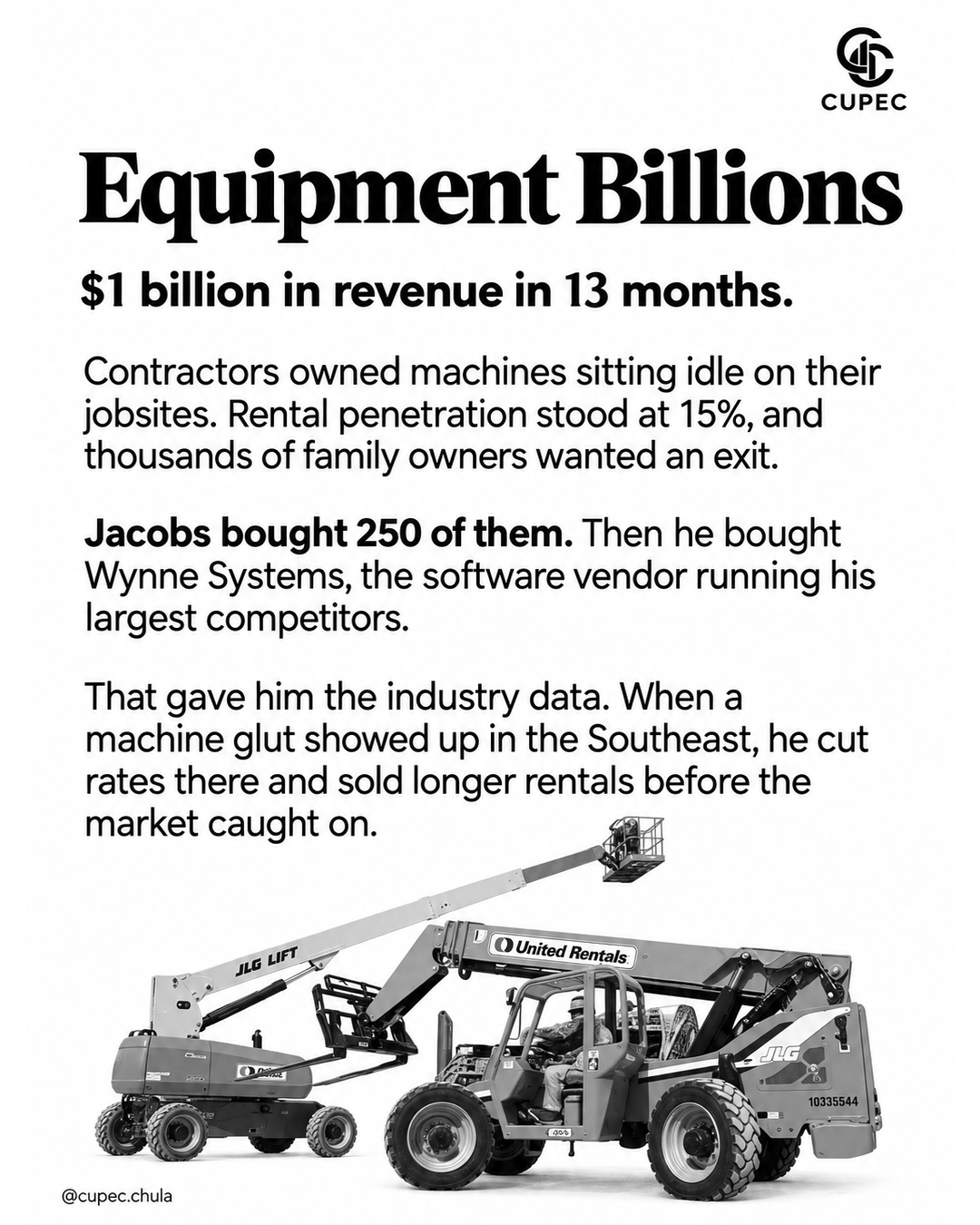
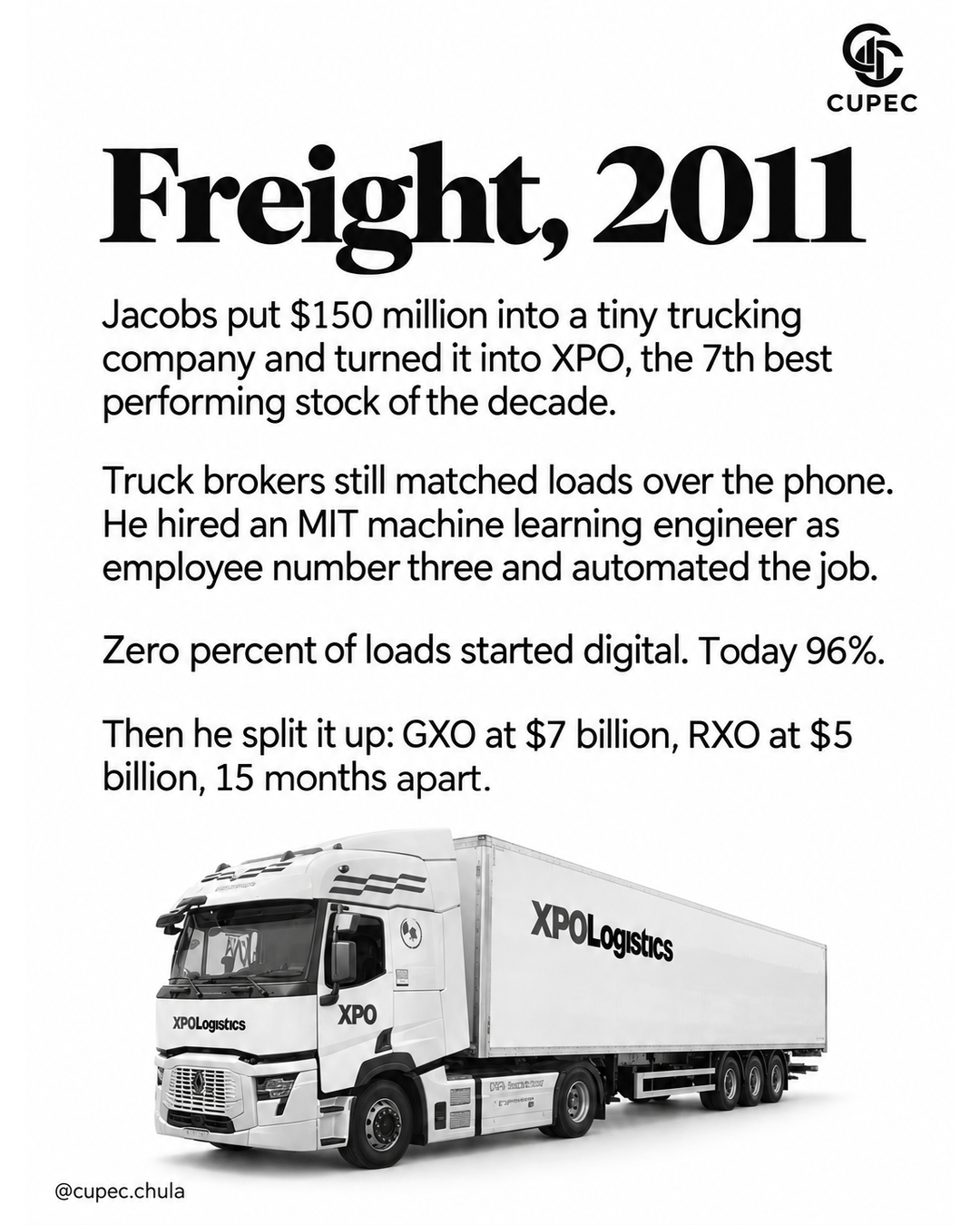
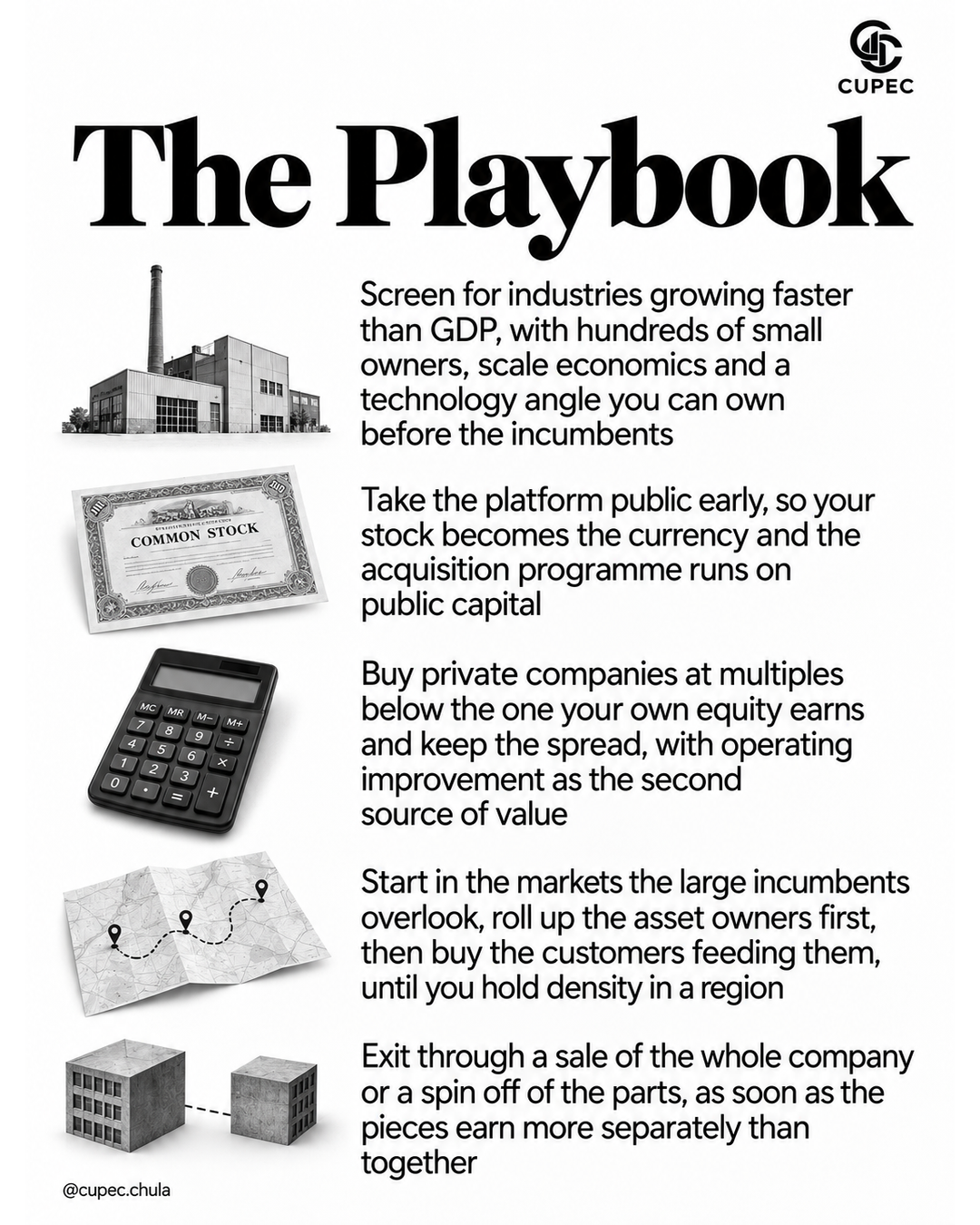
CUPEC's Brad Jacobs carousel looks at bringing smaller operators together in industries such as waste collection, equipment rental and freight. His book, How to Make a Few Billion Dollars, sets out his approach to building businesses. Our focus here is the question an owner must answer after a purchase: how will the combined company operate better?
What is a roll-up?
A roll-up brings multiple businesses together into a larger group. Possible benefits include shared systems, purchasing, technology or management. Those benefits are hypotheses to test. A larger group can also become more complicated to run, particularly when its businesses use different processes.
Explain the improvement
For a student proposal, name the operational change before calculating the hoped-for gain. For example, how would a shared scheduling system improve capacity, or a purchasing process reduce waste? Identify the cost of implementation, the time required and the person responsible.
A question to discuss
Would the acquisition still make sense if a future buyer paid the same valuation multiple? Separating operating improvement from a higher sale multiple makes the proposal easier to evaluate. A roll-up is an operating plan as well as a series of transactions.
The original post
Brad Jacobs has spent his career buying businesses. More than 500 takeovers later, there’s a pattern.
Garbage collection. Equipment rental. Freight. Find an industry full of smaller operators, bring them together, and make the whole thing run better.
Better technology. Better operations. Bigger scale.
That’s how you make a few billion dollars. Swipe for the playbook.
Sources & further reading
- Original CUPEC Instagram carousel ↗
- Greenleaf Book Group: How to Make a Few Billion Dollars, by Brad Jacobs ↗
The learning questions and illustrative examples are CUPEC's editorial commentary. This is educational content, not an investment recommendation.
Explore the ideas
View all 9 original slides