Investor profiles · CUPEC Media
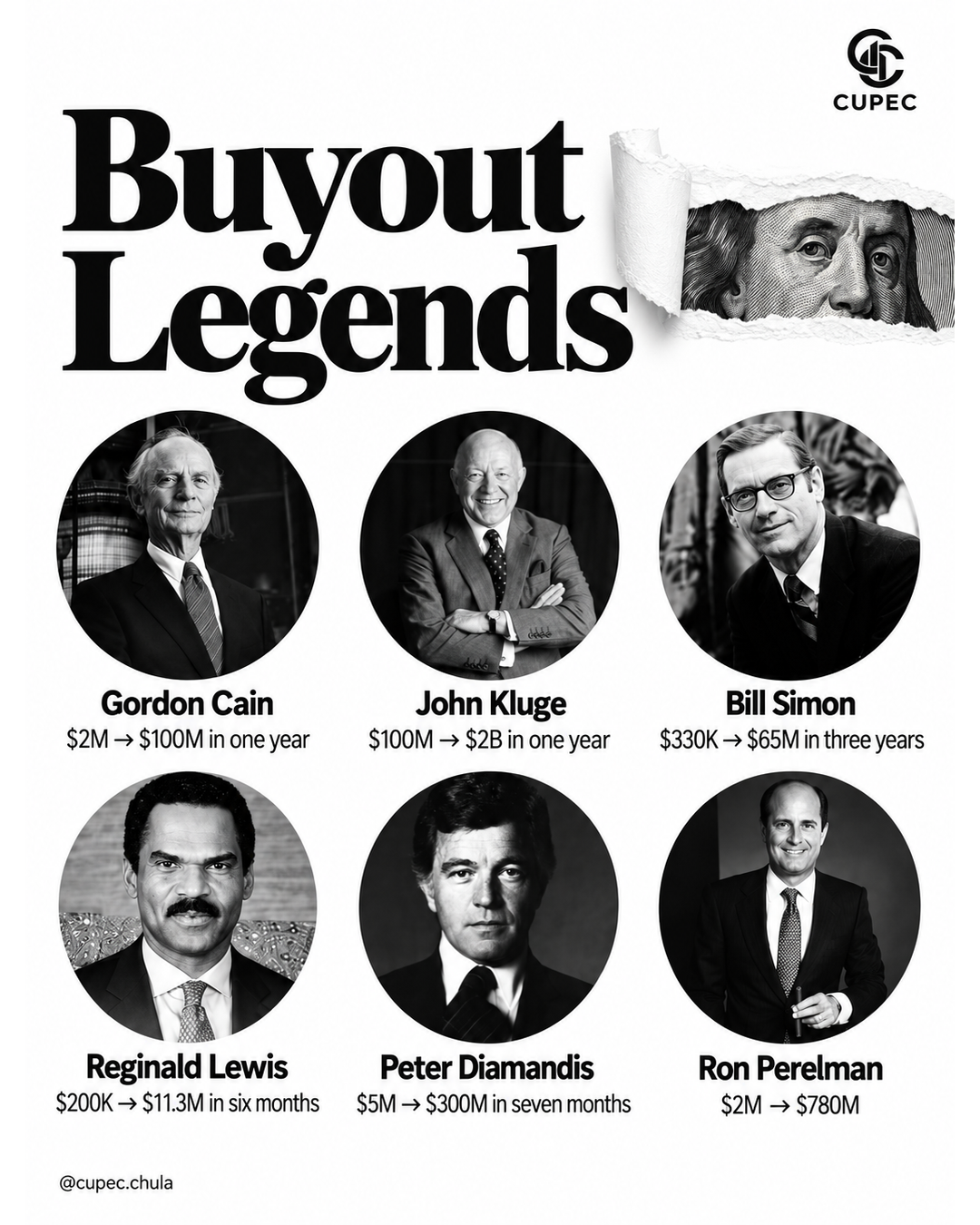
Buyout Legends
The basic buyout playbook: acquire a business, improve it and understand what debt changes for the owner.
Read the story ↓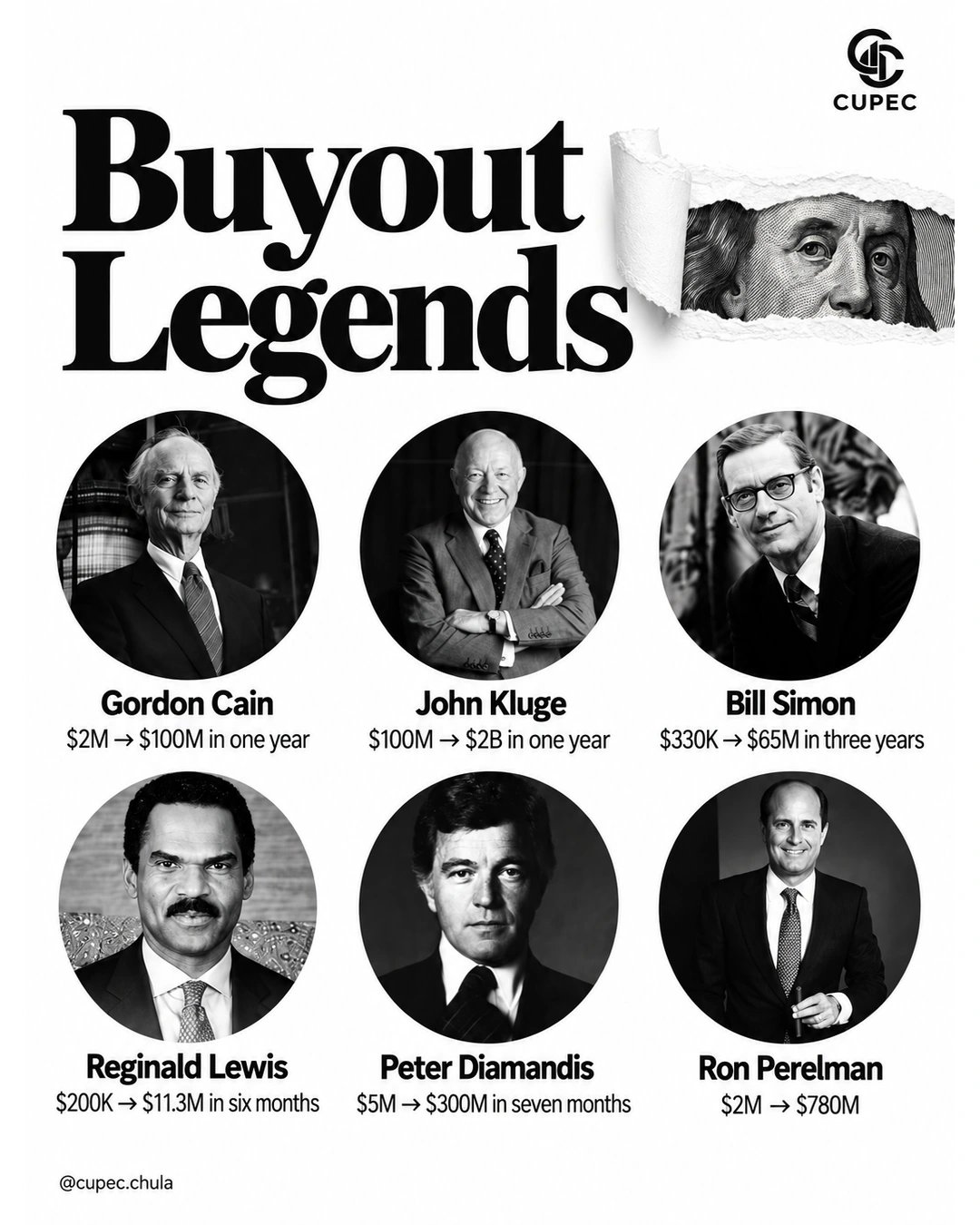
What is a buyout?
A buyout is an acquisition of a controlling ownership interest in a business. When borrowing helps fund the purchase, it is called a leveraged buyout. The buyer's equity and the borrowed money play different roles: lenders expect repayment, while owners receive what remains after the business meets its obligations.
Where can value come from?
CUPEC's original post introduces the buyout playbook. The useful next question is what makes the business worth more: stronger operations, growing earnings, a different valuation at sale, or a reduction in debt. Those are different drivers, and a good explanation separates them.
What should a student investigate?
Start with the business itself. What do customers buy, why do they return, and how much cash is available after operating needs and reinvestment? Then examine the purchase price and financing. Debt can magnify an owner's gain, but repayment obligations remain when performance weakens.
Try it at CUPEC
Use the Private Equity Hackathon to distinguish a promising company from a promising deal. Explain how the business improves, what it costs to buy, and what could go wrong. A famous investor's success is a starting point for investigation, not a substitute for that work.
The original post
Titans of the buyout industry.
The playbook: buy businesses using borrowed money. Sell at a higher multiple. Big equity returns.
Sources & further reading
- Original CUPEC Instagram carousel ↗
- KKR: the firm's founding, in Henry Kravis's account ↗
- Investor.gov: private equity funds ↗
The learning questions and illustrative examples are CUPEC's editorial commentary. This is educational content, not an investment recommendation.
Explore the ideas
View all 1 original slides